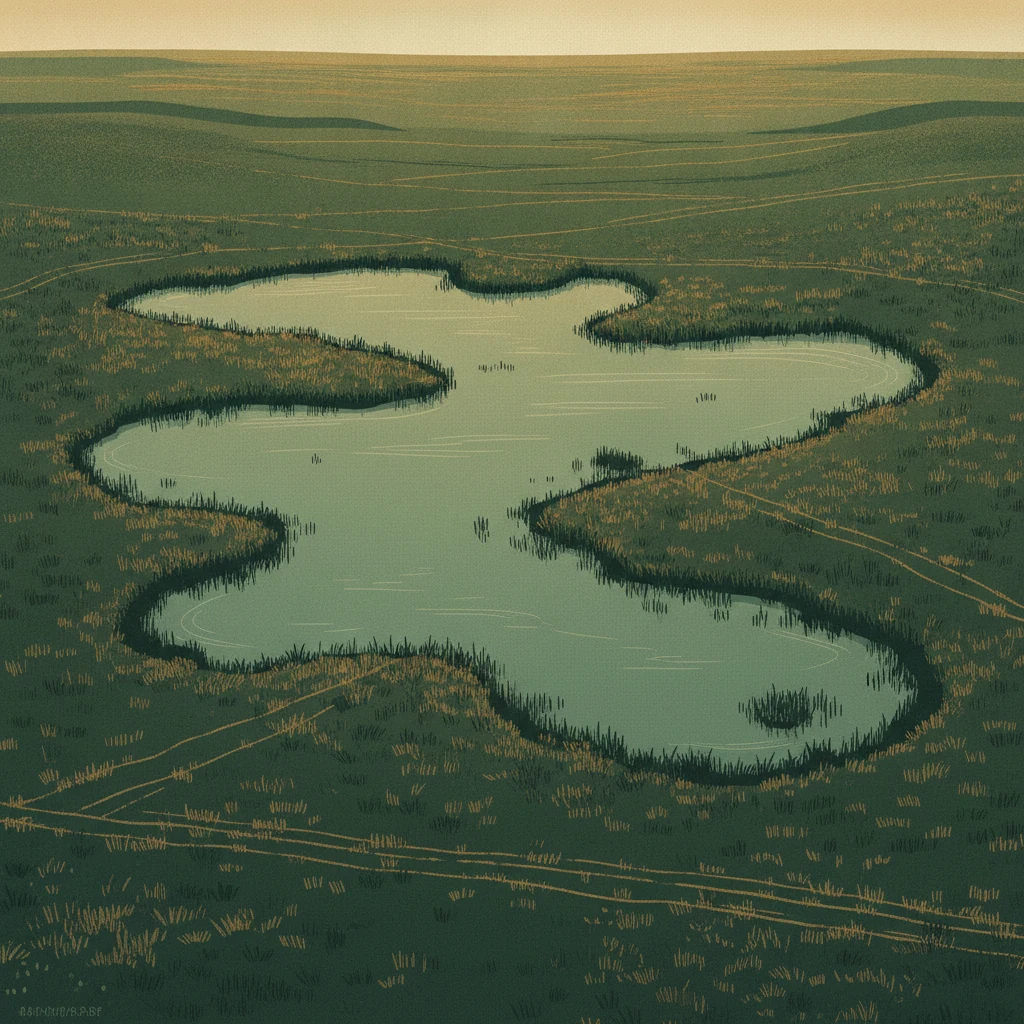
On September 9, 2026, the EPA published a supplemental proposed rulemaking that would narrow the federal definition of "Waters of the United States" further than any rule since the Sackett v. EPA Supreme Court decision in 2023. The proposal would require waterbodies to have perennial — meaning year-round — flow to qualify for Clean Water Act jurisdiction, effectively removing federal protection from the seasonal streams and intermittent wetlands that cover large portions of rural western parcels.
The question for raw land buyers is straightforward: does this mean due diligence item six — checking a parcel for flood zones and federal wetland exposure — just got easier? In some states, yes. In others, exactly the opposite.
What the 2026 SNPRM Actually Proposes
The September 2026 document is a Supplemental Notice of Proposed Rulemaking — an SNPRM, not a final rule. The comment period is still open, and any final rule will follow after the agency reviews public comments. Buyers who read the headline and adjusted their due diligence process should know: the proposed change is not yet law.
The proposed change would replace the current "relatively permanent" standard (which allows seasonal wetlands to qualify for federal jurisdiction if they maintain a surface connection to permanent waters) with a strict perennial-flow requirement. Under the proposal, a wetland that dries out for any portion of the year would no longer fall under Clean Water Act jurisdiction — and would not require a federal Section 404 permit for fill, grading, or development activity.
This builds on a sequence of federal retrenchment. Sackett v. EPA (2023) eliminated the "significant nexus" test that had extended federal coverage to isolated wetlands connected to navigable waters only through groundwater or ecological function. The EPA's September 2023 conforming rule codified Sackett. The 2026 SNPRM would go further still, narrowing the definition of which permanent waters qualify in the first place.
The States That Moved in the Opposite Direction
The federal rollback did not happen in a vacuum. Several states watched the Sackett decision create regulatory gaps — seasonal streams and isolated wetlands that had been federally protected since the 1970s suddenly had no oversight — and responded by enacting or expanding their own independent wetland programs. The result is a fragmented map where "less federal oversight" means less oversight in some states and the same or more oversight in others.
Colorado is the most direct example. The state enacted House Bill 24-1379 in 2024, codified at C.R.S. § 25-8-205.1, specifically to protect the isolated wetlands and ephemeral streams that lost federal coverage after Sackett. Colorado's new dredge-and-fill permitting program operates independently of federal WOTUS jurisdiction — a parcel in Colorado that no longer needs a 404 permit may still require a state permit before any fill or development activity.
New York amended its Freshwater Wetlands Act (N.Y. Envtl. Conserv. Law § 24-0107) in 2022, with key provisions taking effect January 1, 2025. The amendment expanded state jurisdiction to cover all wetlands 12.4 acres or larger — and smaller wetlands deemed of "unusual importance" — removing the requirement that wetlands appear on a pre-approved state map. Under the old law, a wetland that wasn't on the DEC map was effectively unregulated by the state. Under the new law, it may not matter whether it appears on the map.
California was already ahead of the federal floor before Sackett. The Porter-Cologne Water Quality Control Act (Cal. Water Code § 13000 et seq.) defines "waters of the state" broadly to include isolated wetlands and ephemeral features that federal law never reached. California's State Water Resources Control Board regulates fill and alteration of these features regardless of what the EPA does with WOTUS.
Florida and Maryland have long-standing independent programs that also operate irrespective of the federal definition. Florida's Environmental Resource Permit program (Fla. Stat. § 373.413) regulates surface water impacts and wetland fill statewide. Maryland's Nontidal Wetlands Protection Act (Md. Code Ann., Envir. § 5-901) requires state permits for activities altering nontidal wetlands and mandates a 25-foot buffer.
| State | Independent Program | Post-Sackett Response |
|---|---|---|
| Colorado | HB 24-1379 (C.R.S. § 25-8-205.1) | Enacted 2024 specifically to fill Sackett gap |
| New York | Freshwater Wetlands Act (§ 24-0107) | Expanded 2022/2025 — removed map-based threshold |
| California | Porter-Cologne Act (Water Code § 13000) | Already broader than WOTUS — no change needed |
| Florida | ERP Program (Fla. Stat. § 373.413) | State program operates independently |
| Maryland | Nontidal Wetlands Act (Envir. § 5-901) | 25-ft buffer requirement regardless of federal rules |
What This Means for Your Due Diligence Checklist
The practical implication depends on which side of this divide your target parcel sits on. For buyers in states without independent programs — large portions of the rural West and Plains states — the federal rollback does reduce the regulatory burden on seasonal wetland features. A prairie pothole in Wyoming that relied entirely on federal Section 404 jurisdiction may genuinely face less scrutiny under the new proposed framework.
For buyers in Colorado, New York, California, Florida, and Maryland, the picture is different. Your due diligence still needs to account for the state permitting layer, and in Colorado and New York, that layer is broader than it was before the Sackett decision. "The feds rolled back wetland rules" is accurate but incomplete — you also need to know whether your state filled the gap.
Federal wetland status and state wetland status are separate questions that require separate verification. Checking one does not answer the other. The Army Corps of Engineers jurisdiction map tells you about federal 404 exposure; your state environmental agency tells you about state permit requirements.
Four Steps to Verify Wetland Exposure on a Parcel
Item six of our due diligence field guide covers flood zones and federal wetland exposure. Given the current regulatory divergence between federal and state rules, the verification sequence needs to cover both layers:
- Run the parcel through the USFWS National Wetlands Inventory mapper (free, at fws.gov). This shows federally-mapped wetland features. Under the current and proposed rules, you're looking for features that qualify as permanent or perennial waters — seasonal and isolated features may no longer trigger federal jurisdiction.
- Check for hydric soils using USDA's Web Soil Survey (free, at websoilsurvey.nrcs.usda.gov). Hydric soils indicate historical wetland conditions even if a parcel is currently dry. A parcel with hydric soils and no current standing water can still trigger wetland jurisdiction if the soils meet the three-parameter wetland test (hydric soils, wetland hydrology, wetland vegetation).
- Query your state environmental agency directly. Most now publish online GIS layers for state-regulated wetlands. If you're buying in Colorado, New York, California, Florida, or Maryland, verify whether the parcel falls within the state's independent jurisdiction — and whether any prior permits were issued or denied for the parcel.
- Ask your title company for prior permit history. A prior Section 404 permit application — or a denial — is a flag that wetland conditions were identified and evaluated at some point. This shows up in title searches, environmental lien searches, and sometimes deed restrictions. A prior denial is not a permanent bar, but it tells you the parcel has a documented wetland issue.
The Holding Cost Connection
Wetland restrictions do not lower your property taxes. If you buy a parcel with wetland conditions that prevent development or significantly limit land use, you still owe annual property taxes, loan interest if you financed the purchase, and any maintenance or compliance costs the parcel requires.
This is the holding cost trap buried inside a parcel with regulatory exposure. A buyer who acquires 40 acres in Colorado with intermittent stream features — now subject to state permit review — and plans to build a hunting cabin may discover the building envelope is constrained or that state permits add significant cost and timeline before a shovel hits the ground. Meanwhile, the carrying costs accumulate: typically $1,500–$3,500/year on a mid-priced rural parcel even for cash buyers, before any development expense.
Run the Holding Cost Calculator — Model Your Annual Carry Before You Close →What Changes When the Rule Becomes Final
If the 2026 SNPRM is finalized as proposed, intermittent and ephemeral streams will lose federal Clean Water Act jurisdiction across the country. For buyers in states without independent programs, this represents a genuine reduction in permitting exposure and regulatory uncertainty on wetland-adjacent parcels.
For buyers in states that have enacted or expanded independent programs — particularly Colorado and New York — the federal rollback changes the federal layer only. The state layer either stays the same or, in those two states, is now broader than before Sackett. Whether the final rule matters to your specific transaction depends on whether the wetland features on your parcel are the kind that currently trigger state jurisdiction in your state, not just the kind that trigger federal jurisdiction.
The due diligence principle is unchanged: verify the federal overlay and the state overlay separately. One is shrinking. The other moved in mixed directions depending on where you're buying.
Sources
- U.S. EPA, Supplemental Notice of Proposed Rulemaking: Revised Definition of "Waters of the United States", published Federal Register September 9, 2026. epa.gov/wotus
- Bracewell LLP, Analysis: EPA's September 2026 WOTUS Supplemental Rulemaking. bracewell.com
- Colorado General Assembly, House Bill 24-1379, codified at C.R.S. § 25-8-205.1. leg.colorado.gov
- New York State, Freshwater Wetlands Act, N.Y. Envtl. Conserv. Law § 24-0107, as amended 2022 (effective January 1, 2025). dec.ny.gov
- California State Water Resources Control Board, Porter-Cologne Water Quality Control Act, Cal. Water Code § 13000 et seq. waterboards.ca.gov
- Supreme Court of the United States, Sackett v. Environmental Protection Agency, 598 U.S. 651 (2023). supremecourt.gov