North Florida (Panhandle/Big Bend)
$2,500–$6,000
per acre
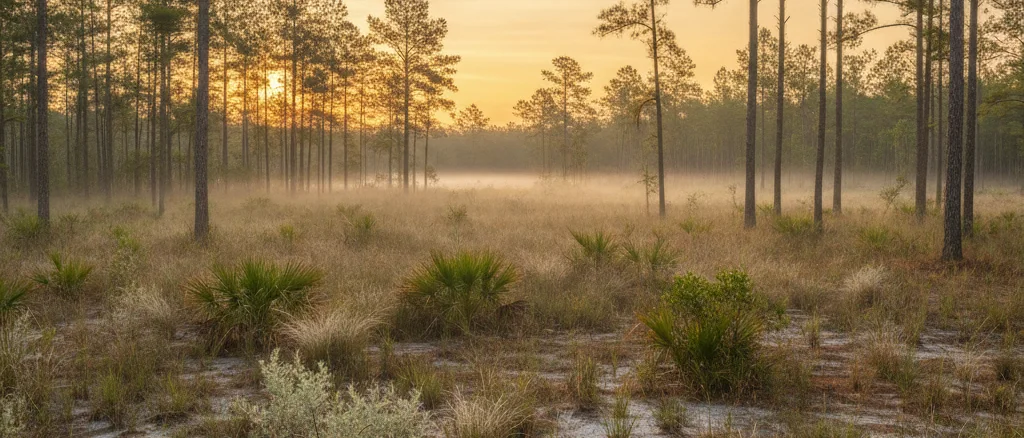
Prices are driven by timber value, hunting quality, and proximity to major highways or small towns.
timber
hunting
recreation
agriculture
investment
40–500 acres
Florida's raw land market is defined by its diverse ecosystems, from pine forests to vast wetlands, and its unique blend of development pressure and stringent environmental protection. Buyers must navigate a complex regulatory landscape, particularly concerning water and wetlands, while also considering the state's appeal for recreation, timber, and conservation.
The extensive and complex environmental regulations, especially regarding wetlands and water, pose significant due diligence hurdles and potential use restrictions for raw land buyers.
Florida operates under a 'regulated riparian' system, where both surface water and groundwater are considered public resources managed by the state. While landowners adjacent to water bodies have certain rights, the state's five Water Management Districts (WMDs) have significant authority to regulate water use. Permits are generally required for consumptive uses (e.g., irrigation, public supply) and for activities impacting water bodies or wetlands, with WMDs establishing rules based on regional water supply plans and environmental protection goals.
Federal land context: The Bureau of Land Management manages less than 1,000 acres in Florida, primarily small scattered parcels, meaning buyers will rarely encounter BLM land adjacency or access issues.
Price ranges reflect recreational, hunting, and timber raw land — not farmland or subdivided residential lots.
Prices are driven by timber value, hunting quality, and proximity to major highways or small towns.
Proximity to Orlando/Tampa metro areas and potential for future development or conservation easements significantly influence prices.
Dominated by wetlands, prices reflect access, environmental restrictions, and suitability for hunting or conservation.
Even for raw land, waterfrontage significantly inflates prices, but strict environmental regulations often limit development potential.
State-specific landmines that standard due diligence checklists miss.
Extensive Wetlands Regulations: Florida has stringent state (DEP, WMDs) and federal (ACOE) wetlands regulations that can severely limit or prohibit development, requiring costly delineation and permitting.
Coastal Construction Control Line (CCCL): Properties seaward of the CCCL are subject to strict building and environmental regulations, impacting development potential and insurance.
Conservation Easements & Mitigation Banks: Many large tracts are encumbered by or suitable for conservation easements or mitigation banks, which can restrict future use but also offer financial incentives.
Invasive Species Management: Buyers must budget for ongoing management of pervasive invasive plants (e.g., melaleuca, Brazilian pepper) that can degrade habitat and property value.
High Property Insurance Costs: Coastal and low-lying properties face high and rising costs for flood and hurricane insurance, which can be a significant long-term expense.
Subsurface Rights: Mineral rights (especially phosphate and oil/gas) are often severed from surface rights, meaning the land buyer may not own what's beneath the surface.
Model what it will actually cost to hold raw land before it generates any income. Property taxes, road maintenance, and stewardship add up on ground that produces no cash flow.
Browse water doctrine, pricing, and due diligence requirements for all 50 states.