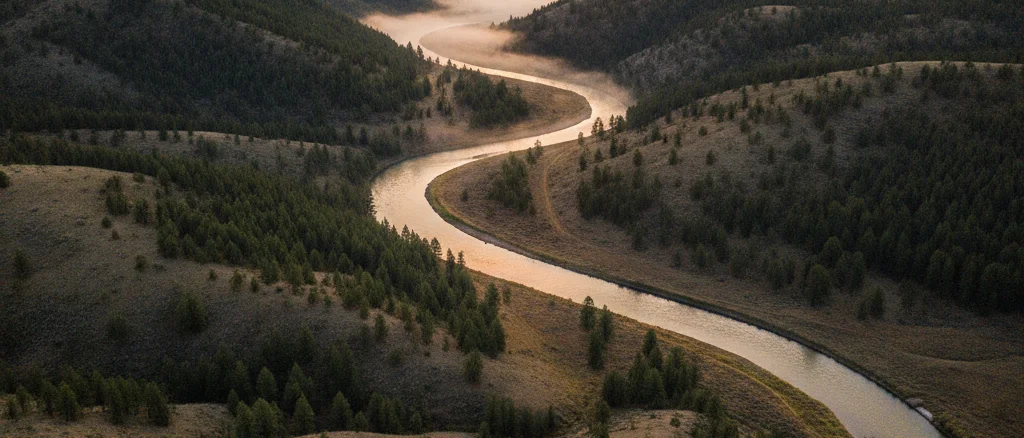
Western Mountains (e.g., Flathead, Missoula, Lincoln Counties)
Proximity to national forests, lakes, and ski resorts drives high demand and prices, often with steep terrain and dense timber.
Montana's raw land market is defined by its vast public lands, iconic landscapes, and strong recreational appeal. Buyers seek everything from remote hunting parcels to scenic mountain retreats, often facing high demand and complex access or water rights issues. The state offers diverse opportunities but requires thorough due diligence.
High demand, complex water rights, and significant federal land ownership create unique challenges and opportunities for buyers.
Montana operates under the doctrine of prior appropriation, often summarized as 'first in time, first in right.' This means that the first person to put water to a beneficial use has a right to that water superior to later users. Both surface and groundwater rights are administered by the Montana Department of Natural Resources and Conservation (DNRC). New appropriations typically require a permit from the DNRC, unless specifically exempted (e.g., small domestic wells). The adjudication of historical water rights is an ongoing, complex process, which can add uncertainty to older claims.
Federal land context: Approximately 8.1 million acres of BLM land in Montana, often creating checkerboard patterns with private land, leading to complex access issues and potential for landlocked parcels.
Price ranges reflect recreational, hunting, and timber raw land — not farmland or subdivided residential lots.
Proximity to national forests, lakes, and ski resorts drives high demand and prices, often with steep terrain and dense timber.
High demand driven by scenic beauty, world-class fishing rivers, and proximity to Bozeman, leading to premium prices and competitive markets.
Offers a mix of plains and mountain access, often more affordable than western regions but still with strong recreational value and good hunting.
Characterized by vast, open landscapes, lower population density, and excellent big game hunting, often with limited infrastructure and remote access.
State-specific landmines that standard due diligence checklists miss.
Complex water rights due diligence under the prior appropriation doctrine, including potential for unadjudicated claims and ongoing adjudication processes.
Access challenges due to extensive federal land (BLM, Forest Service) and checkerboard land patterns, requiring careful easement verification for legal access.
Strict subdivision regulations, even for minor subdivisions, which can complicate future division or development plans and require county review.
Wildlife habitat management requirements and potential for conservation easements impacting land use and development, especially in prime wildlife areas.
Seasonal access limitations due to heavy snow in winter and muddy conditions in spring, especially on unmaintained or private roads.
Weed management plans are often required and enforced, especially for noxious weeds, incurring ongoing costs and labor for landowners.
Model what it will actually cost to hold raw land before it generates any income. Property taxes, road maintenance, and stewardship add up on ground that produces no cash flow.
Browse water doctrine, pricing, and due diligence requirements for all 50 states.