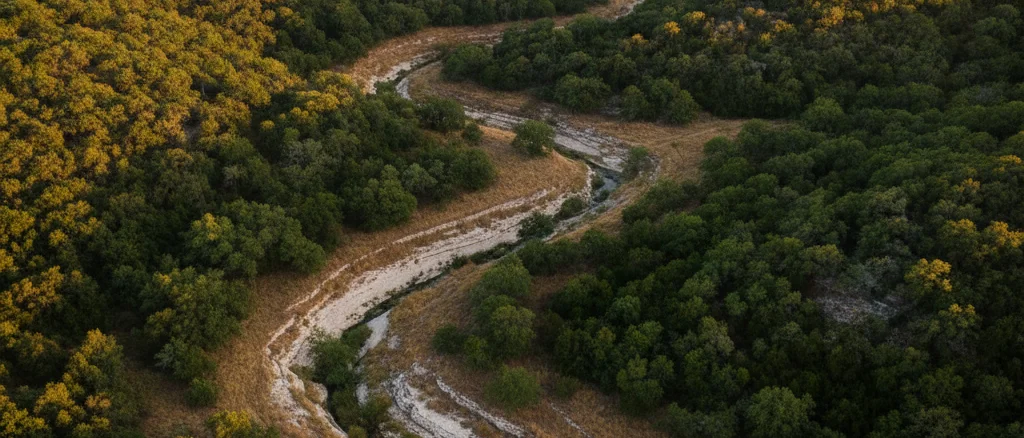
East Texas Piney Woods
$3,000–$8,000
per acre
Timber value significantly influences pricing, alongside recreational appeal and abundant water features.
timber
hunting
recreation
wetlands
investment
20–500 acres
Texas offers an incredibly diverse raw land market, from dense pine forests to arid desert mountains, all under a strong tradition of private land ownership. Buyers must navigate a unique legal landscape, particularly concerning water and mineral rights, alongside a robust property tax system.
The complexity of water and mineral rights, combined with high property taxes, necessitates thorough due diligence for Texas land buyers.
Texas operates under a dual system: surface water is governed by the Prior Appropriation Doctrine, requiring permits from the Texas Commission on Environmental Quality (TCEQ) for diversion and use. Groundwater is largely governed by the 'Rule of Capture,' allowing landowners to pump water from beneath their property, but this is increasingly subject to regulation by Groundwater Conservation Districts (GCDs) which can impose well spacing, production limits, and permitting requirements.
Federal land context: Texas has negligible federal land ownership, meaning buyers rarely encounter federal land adjacency, access, or inholding issues.
Price ranges reflect recreational, hunting, and timber raw land — not farmland or subdivided residential lots.
Timber value significantly influences pricing, alongside recreational appeal and abundant water features.
Scenic beauty, proximity to major metros, and live water features like rivers and creeks drive premium prices.
World-class whitetail deer hunting and large ranching operations are primary value drivers in this arid region.
Remoteness, vastness, and unique desert/mountain landscapes appeal to buyers seeking solitude or large tracts.
Proximity to Dallas-Fort Worth and other metros, along with lake access, significantly impacts land values.
State-specific landmines that standard due diligence checklists miss.
Mineral Rights Severance: It is common for surface and mineral estates to be severed, meaning a land purchase may not include mineral rights, potentially leading to oil/gas exploration on your property.
Groundwater Regulation by GCDs: While the Rule of Capture generally applies, Groundwater Conservation Districts (GCDs) can impose significant restrictions on well drilling and water usage, requiring careful due diligence.
Adverse Possession Risk: Texas has relatively short adverse possession statutes (3, 5, 10, 25 years depending on circumstances), making clear title and boundary surveys crucial, especially for unmaintained or inherited tracts.
High Property Taxes: Even with an agricultural or wildlife management exemption, Texas property taxes are among the highest in the nation, requiring careful budgeting.
Access Easements: Many rural properties, especially older subdivisions or large tracts, may rely on prescriptive easements or have historic oil/gas field roads that complicate clear access.
Wildlife Management Plan Requirements: To maintain an open-space (ag) exemption under a wildlife management plan, specific activities and record-keeping are required, which can be more involved than traditional agricultural use.
Model what it will actually cost to hold raw land before it generates any income. Property taxes, road maintenance, and stewardship add up on ground that produces no cash flow.
Browse water doctrine, pricing, and due diligence requirements for all 50 states.